Tapescape is an interactive sound installation that reimagines magnetic tape as a spatial surface for composition. Rather than treating tape as a linear medium for fixed playback, Lu records and arranges sound on tapes across flat acrylic panels, allowing composition to exist as a field of directions, densities, and gestures distributed in space.
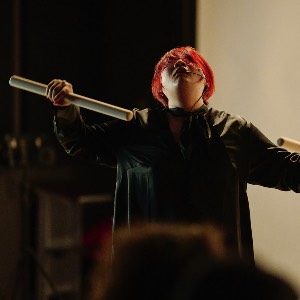
Visitors are invited to use a custom-built playback “pen” to draw across the surface of the work. By moving the pen perpendicular to each taped composition, they activate recorded sounds through a four-channel speaker system. As different paths are traced across the acrylic panels, sounds emerge, recede, and shift through the room, making each encounter distinct. Listening becomes an active process of searching, following, and orienting: rather than receiving a predetermined sequence, the audience uncovers the composition through touch, movement, spatial and embodied attention.
The work considers how sound might be composed and encountered outside of linear time. In Tapescape, recording becomes a tactile landscape and listening becomes a means of navigation