What is the Shape of Water? A cross-species meditation

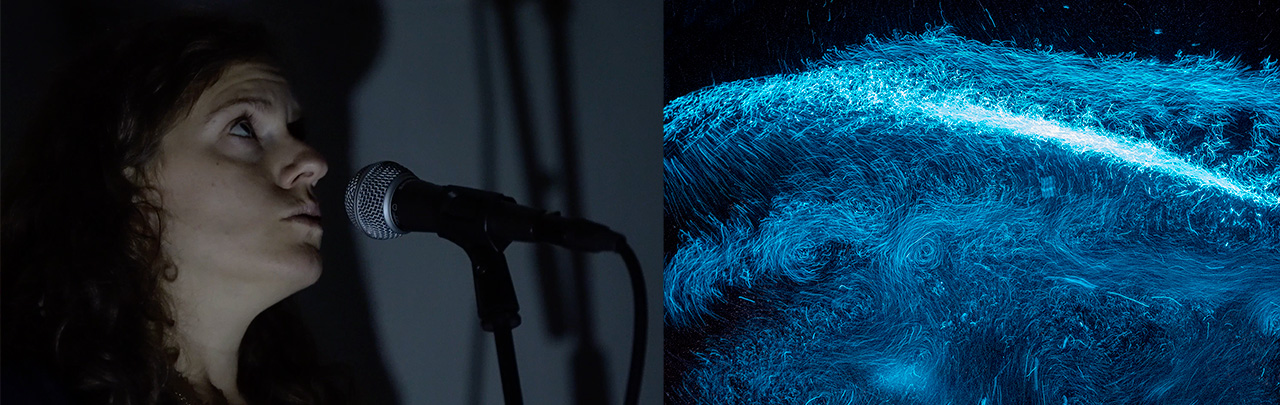
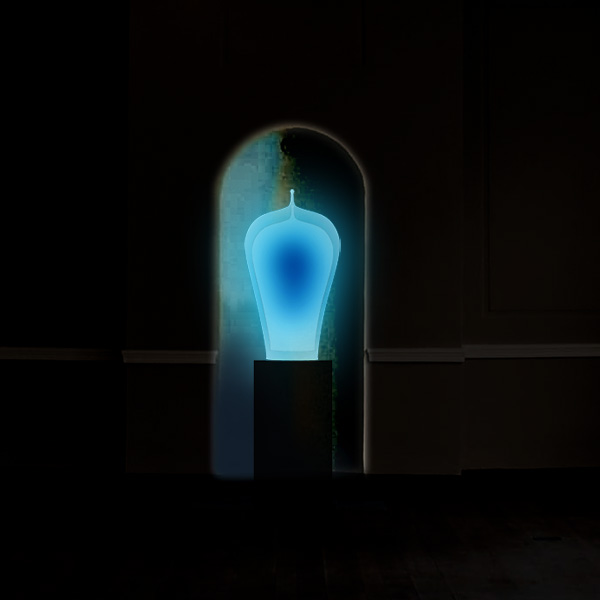
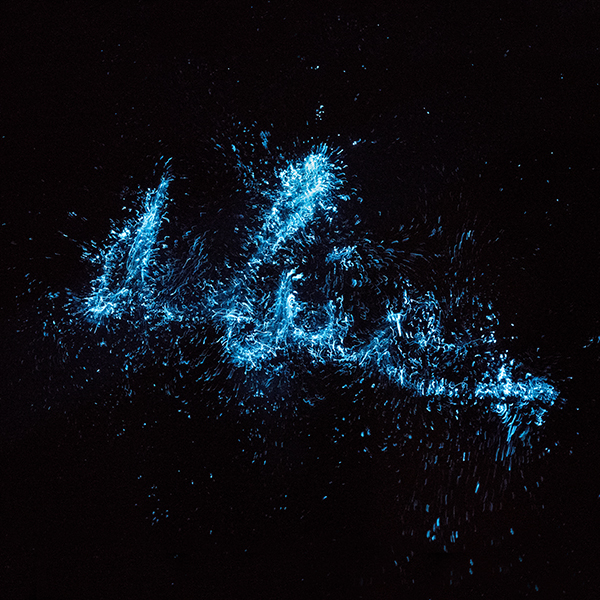
The audience enters a pitch-black room with tens of thousands of invisible organisms in a bulb-like aquarium. They’re invited to speak, and if they do their voice excites the bioluminescent dinoflagellates into illuminating. The microbes create a blue glow of bubbles shaped from the pitch and volume of the voice emanating within the water. Therefore, if you ask “what’s the shape of water?”, the dinoflagellates will tell you.

August 19, 2023

1:00pm – 4:00pm

Harvestworks Art and Technology Program

Nolan Park, Building 10a,
Governor’s Island, NYC

48”x 72” ceiling tank in 10×12’ black room.
35 liters of marine water with millions of micro-organisms, plexiglass, arduinos, Maxpatch, laptop, microphone and AV, for the “Light City Festival” in Baltimore’s Inner Harbor, 2019.

CREDITS

The original version of this project was engineered by Lisa Moren, with marine biology by Dr. Tsvetan Bachvaroff, and coded by Jason Charney for the Light City Festival, Baltimore Maryland in 2019. This new version of the project is grateful for the engineering by Dan Fucich (Aglen Air) and software coding by Adam Knapp for the exhibition “Chamber of Wonders”, a one-person exhibition at the Peale Museum, Baltimore Maryland, Dec. 2023-Feb 2024. This work in progress is funded by UMBC’s Center for Research in the Creative Arts (CIRCA). The project is also grateful for the support from the Institute of Marine and Environmental Technology (IMET).
About the artist(s)

Lisa Moren is a multi-disciplinary artist who works with emerging media, bio-matter, public space, and works-on-paper. Since 2001, she has worked with communities to document under-represented memories from Berlin and cities in Central and Eastern Europe that were archived as interactive installations.


Dr. Tsvetan Bachvaroff’s is a marine biologist whose research is focused on dinoflagellate evolution with special emphasis on the parasitic dinoflagellates, using large scale sequencing and phylogenetic methods to describe the evolutionary history of different types of genes in dinoflagellates. He uses DNA sequence analysis from data collection, assembly, annotation and phylogeny.